The Cement Mixer

I want to tell you about my friend. This friend of mine is my patient. I’ve never seen him outside of the walls of my clinic, but why is he friend? Because from the first moment I talked with him, his story changed my life.
I didn’t expect his appointment to go the way it did.
He came in for a routine skin check — the kind I do dozens of times a day. He was in his forties, with normal-appearing skin, and no obvious warning signs staring back at me. But early in the exam, he mentioned that he was at high risk for skin cancer.
I paused.
High risk didn’t match what I was seeing. I asked him why he felt that way.
He told me he’d had a heart transplant a few years earlier.
That stopped me. Organ transplant recipients take immunosuppressive medications to prevent rejection, and those medications significantly raise the risk of certain skin cancers. He knew his own medical history better than most patients I see. He had done his homework. He was taking his health seriously.
I was impressed. But what came next is what I think about still.
I asked him about the transplant — how it happened, what led to it. And he told me.
He had been at home one day, pouring cement for a small project. He had rented a cement mixer. Somewhere between the bag and the mold, his heart stopped beating.
He fell face first into the wet cement.
His wife called 911. The EMTs arrived quickly, performed life-saving measures, and got him stabilized. By any definition, it was a miraculous response. They saved his life.
And then they loaded him into the ambulance.
When he regained consciousness, his first thought wasn’t about his heart. It wasn’t about his wife, or the hospital, or what had just happened to his body. No — his first thought was about the cement mixer.
He had rented it. The cement was drying. He was going to ruin it and get charged for it.
He kept asking the EMTs to take him back. Just let him finish the project. Just a few minutes. He was fine.
The EMTs, to their great credit, explained that his heart had fully stopped and he was not, in fact, fine. They took him to the hospital.
Here is the part that changes me every time I tell it.
After dropping him off at the hospital, the EMTs didn’t head back to the station. They didn’t stop for a snack. They didn’t clock out or decompress or do any of the things they would have been completely entitled to do after saving a man’s life.
They drove back to his house.
And they finished his cement project.
They had heard his worry. They had listened — really listened — to what was underneath the confusion and the adrenaline and the fear. And they decided that their job wasn’t finished just because he was alive. He needed to know the mixer was okay. So they made it okay.
I’ve thought about those EMTs a lot since that appointment.
There is a kind of heroism that makes the news — the dramatic rescue, the split-second decision, the moment caught on camera. And that heroism is real and worth celebrating. But there is another kind that is quieter and, I think, rarer. It is the heroism of paying attention. Of noticing what someone actually needs, not just what they’re asking for. Of going back to finish the cement when nobody asked you to and nobody would have blamed you for not doing it.
That is the kind of person who makes the world better without ever being recognized for it.
My patient knew this. He told me that story not to get sympathy, but because those EMTs had changed him. He thought about them often. He tried to live the way they had acted — present, attentive, quietly generous.
And if I may, this friend of mine, he is present, attentive, and quietly generous.
I walked out of that appointment thinking about all the people I see every day — in my clinic, in the grocery store, in the car next to mine at a stoplight — and how little I know about what they are carrying. This man looked, from the outside, like any other patient in his forties coming in for a routine check. He was, in fact, someone who had died and come back, someone whose heart had been replaced, someone who had been saved by people who then went and finished his cement.
You never know.
That is not a reason to feel overwhelmed. It is a reason to slow down. To ask one more question. To listen to the answer.
The cement mixer was fine, by the way.
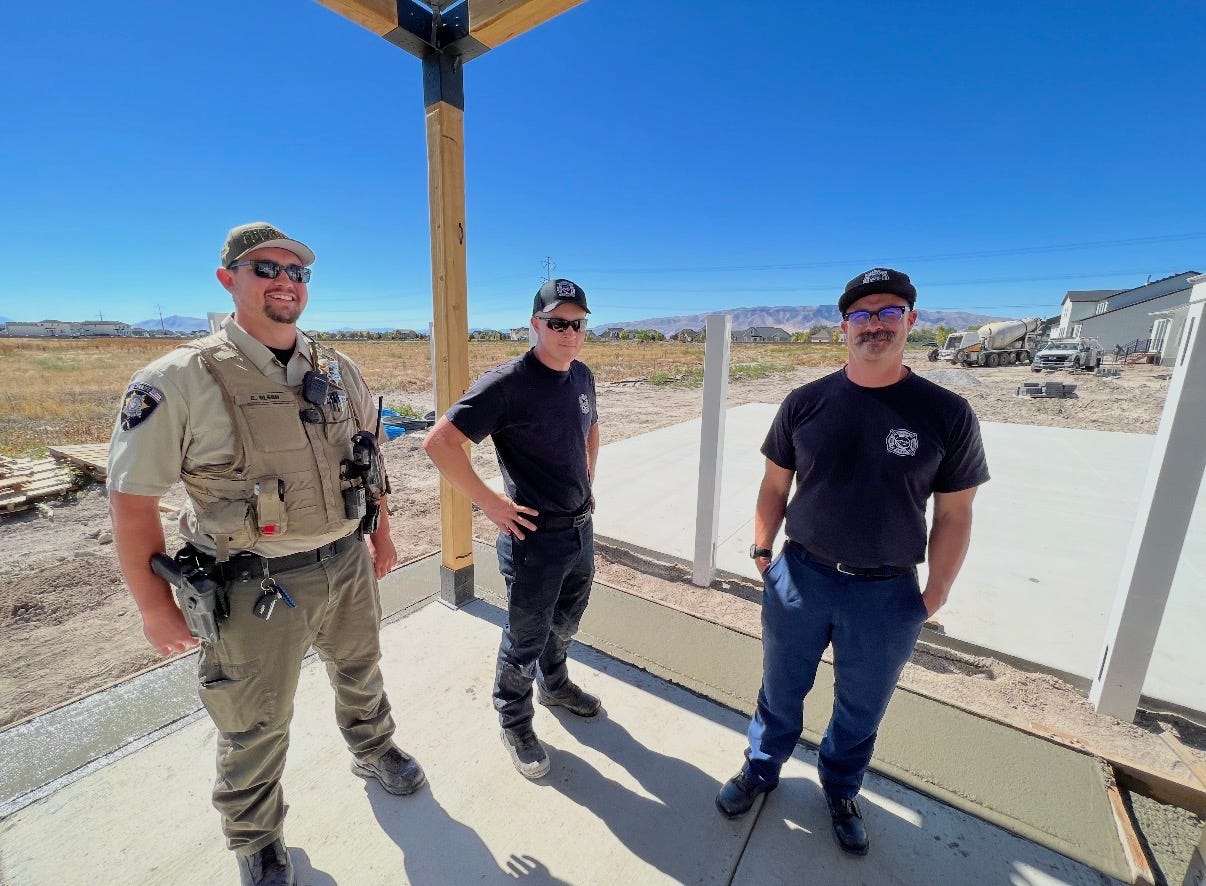
(Story and photo shared with patient permission.)
What an amazing story. Thank you for sharing!
This is amazing. Those EMTs are true heroes